English
 English
English

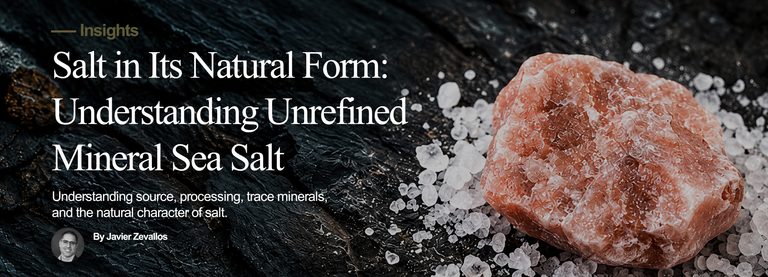
Long before today’s landscapes took shape—and long before modern industry, plastics, or other human-made environmental influences—ancient seas covered parts of what is now the western United States. Over geological time, those waters disappeared, leaving behind mineral-rich salt deposits preserved within the earth.
That geological history is part of the story behind the mineral sea salt offered by Vanguard Minerals—and one of the reasons I believe the source of salt deserves more attention.
Plastic has become part of the modern environment, and researchers have identified microplastics in commercial salts from a variety of sources. Studies of food-grade salts have also shown that the amount detected can vary considerably by source, geography, and product.
The sea that formed the mineral salt we offer existed during the Jurassic era—millions of years before plastics and modern industrial activity. According to Redmond’s elemental-analysis documentation, the ancient seabed was preserved deep within the earth and protected from exposure to present-day oceans and surface contaminants.
That distinction does not mean origin is the only consideration when choosing salt, nor does it by itself establish that a product is free of microplastics. For me, it reinforces a simpler point: when choosing a natural mineral product, understanding where it comes from matters.
Source is only part of the story. What happens after a mineral is harvested matters as well.
Redmond’s elemental-analysis summary states that nothing is extracted and nothing is added to the salt, and that its elements are naturally occurring. Years of third-party laboratory testing using elemental analysis have found that approximately 60 elements are regularly detected, although the exact concentrations naturally vary from sample to sample.
Those trace elements are present in small amounts, but together they reflect the natural mineral profile of the ancient deposit. I believe that distinction is more meaningful than treating trace minerals as a nutritional claim: they help tell the geological story of the salt and the natural source from which it comes.
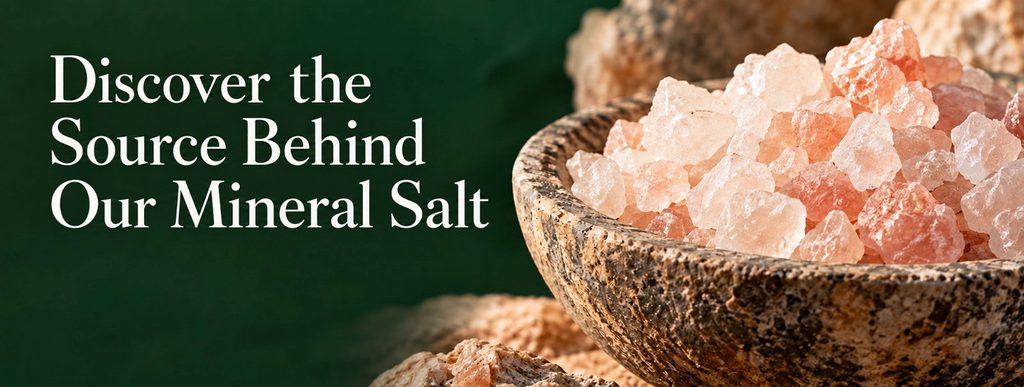
Salt is often viewed as one of the simplest ingredients in the kitchen. In many ways, it is. But behind that simplicity are meaningful differences in origin, geology, processing, and mineral composition.
For Vanguard Minerals, responsible sourcing begins with understanding those differences and communicating them clearly. Knowing the source does not require turning an everyday ingredient into something it is not. It simply allows consumers to make a more informed choice and to better appreciate the natural resource behind the product.
What interests me most about this salt is the connection between something extraordinarily old and something remarkably familiar: the food we prepare every day.
An ancient sea created the deposit. Geological processes preserved it over time. Today, that natural mineral resource continues its journey into the modern kitchen.
At Vanguard Minerals, we believe knowing where a mineral comes from—and understanding how it reaches you—is part of appreciating its value.